


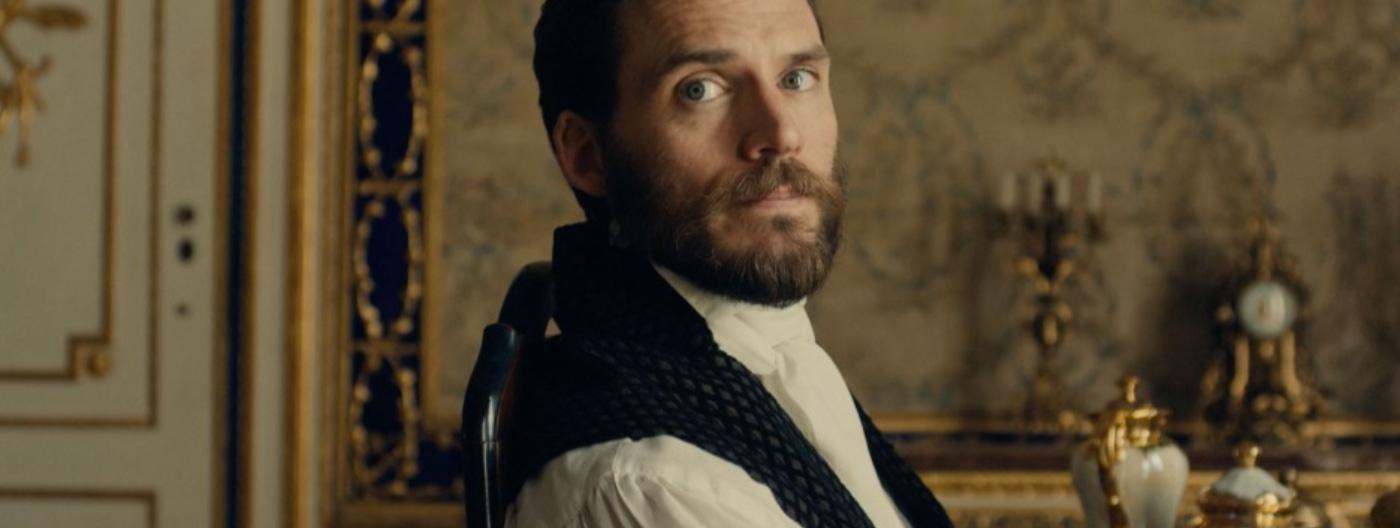
At our last screening of The Forsytes, several of you told me I was missing out on the early “binge before broadcast” opportunity for The Count of Monte Cristo. I took your word for it. After the first episode, I was hooked. Then, like so many of you, I watched the remaining episodes night after night, unable to stop. I loved everything about it. The location scouts for this outdid themselves because each location, each room was absolute eye candy. I also loved the music with the opening credits. I also loved the way each episode begins. Just when a line or moment really lands, it cuts straight to the opening credits. Every time that music kicked in, I found myself smiling, thinking, "This is so great.”
I highly recommend this short feature if you have yet to be convinced to hit “play” on this one.
Originally serialized in a weekly French newspaper, The Count of Monte Cristo feels perfectly suited to an eight-episode Masterpiece adaptation, each hour ending with a cliffhanger that reminds us this story was always meant to be experienced over time.
While often remembered as a tale of revenge, what has stayed with me is how deeply this story is about waiting. Edmond Dantès waits fifteen years in prison; first for justice, then in despair, and finally with purpose after his prison mate, Abbé Faria, teaches him how to turn patience into preparation. Edmond learns history, science, philosophy, and language. Most of all, he learns how to hope. Waiting becomes productive and empowering, but it also begins to shape the man he will become.
Once he escapes and claims his fortune, waiting takes on a new form. Now a Count, his patience is no longer forced upon him; it is chosen and controlled. Each step of his revenge unfolds slowly and meticulously. By then, time has made Edmond powerful—but not whole. The PBS adaptation’s final line, “love can heal,” lands softly against the harder truth the story cannot erase: the years he spent waiting for justice also taught him how to calculate harm. Innocent people are wounded along the way, and any of the much-anticipated redemption that follows arrives late, incomplete, and shadowed by tragic consequences.
That tension between patience that prepares and patience that corrodes made me think of another program on PBS that I’m very much looking forward to. SUFFS (the Broadway musical) premieres May 8 on Great Performances. This story follows the dramatic and, at times, fractured, multi-generational fight of American suffragists in their relentless battle to pass the 19th Amendment. Whether it’s one man waiting for personal reckoning or a movement waiting for recognition, the question remains the same: does our waiting serve only ourselves, or does it move the world toward something better? The women of SUFFS practice a different kind of endurance—one rooted not in secrecy or control, but in collective persistence, as they wait not for revenge, but for rights, voice, and dignity.
Taken together, these stories remind us that waiting is never empty time. It is a moral space—one we fill with intention. Time will pass regardless. What matters is what we build while we wait, who is harmed along the way, and whether the end of that long patience leaves room for healing—or simply settles the score.
WAITING FOR PROGRESS: A CONVERSATION WITH SUFFS CREATOR, SHAINA TAUB
I had the privilege of crafting questions for the two-time Tony Award winner about her 2024 musical, Suffs. Shaina Taub made history as the first woman to win a Tony for Best Book and Best Score by herself. Shaina LOVES public television and was excited to answer these for the Drama Digest readers:
LAURA
Many MASTERPIECE fans are drawn to adaptations of diaries, letters, and historical records. What source (letters, speeches, journals) most influenced your writing of Suffs, and how did you translate that voice into song?
SHAINA
I read hundreds of books in my decade of research, but my bible was Jailed for Freedom by Doris Stevens. I also treasured many letters including two I musicalized - Dudley Malone’s resignation letter and Phoebe Burn’s letter to her senator son, urging him to vote for suffrage. I kept some original lines, woven together with original lines of my own, in an effort to make it sound as human and immediate as possible.
LAURA
When you were writing Suffs, whose emotional journey surprised you most as it deepened on the page?
SHAINA
My biggest priority on Suffs was to foreground the humanity of the characters, and to imagine the inner emotional lives of these women that maybe can’t be found in the history books. Alice Paul definitely took me the longest to crack, as she didn’t exactly leave behind a trail of emotional breadcrumbs, so to speak. I found the more I allowed myself to bring my own experience to her, the more she opened up for me - her drive, her anxiety, her fears, her hopes.
LAURA
The women of Suffs disagree fiercely, even though they’re fighting for the same goal. Was it important for you to portray that friction, and what do you think it reveals about movements led by women?
SHAINA
I knew early on that I wanted the central conflict of this musical to be between people who want the same goal but have wildly different ways of going about it. That felt more dramatically compelling than a show about who is “right” and who is “wrong”. We see these disagreements about tactics across social movements, whether along generational, racial, gender, or class lines. My hope was - even though this is a very specific story about the women’s movement in the early 20th century, it might speak to a more universal struggle we see repeating itself even today.
LAURA
This story is about women making history, but it’s also about waiting: waiting for change, recognition, progress. Was there a deliberate use of stillness, pauses, or restraint in the writing that differs from other Broadway Musicals that perhaps audiences didn’t notice—but you feel deeply?
SHAINA
I deliberately used a lot of diminished chords - not simply major, or minor - but something more complex, less resolved - to emphasize the perpetually unfinished nature of these fights.
LAURA
If SUFFS were adapted for television as a limited PBS drama series, which moment would you slow down with and explore more closely with a camera?
SHAINA
There are so many more stories to tell than my own musical ever could! In a dream world, we could do a whole season of television for each individual character, diving deeper into her story, beginning with Ida B. Wells. She lived an astonishing life!
Check out a trailer before the premiere on May 8!
Fun Fact: Shaina Taub also has a strong connection to PBS through Sesame Street. She wrote several songs including this one, a duet with Sara Bareilles and Abby Cadabby
THE WAIT IS OVER: JOIN US FOR GRANTCHESTER’S FINAL HURRAH!
Grantchester Exclusive Screening
Thursday, June 4 | 7 - 8:30 PM
Broadway Centre Cinemas - Salt Lake City
Join fellow Masterpiece Mystery fans as we gather to celebrate, and say farewell to, this beloved series. We will have a “Vicarage Tea” complete with iced tea and lemon cake. Drama Digest readers are the first to hear about this one, so simply respond to this email if you would like a seat. Oh, and we’ll do a slide show called “Questions and Confessions” so if you have a lingering question about the characters, plot lines, etc., or you have a light confession to share (anonymously) with a public audience, send it my way 😊 Need an example?
Question: “At what point does this village qualify as statistically unsafe?”
Confession: “I came for British restraint and stayed for behavior that is… surprisingly unrestrained.”
Click HERE for more information about the final season and to watch a trailer!
MY BACKSTAGE LIST
What I’m reading:
I’m currently reading The Unselected Journals of Emma M. Lion because all my cool friends are reading it. Need to keep up. Set in 1883 Victorian London, it follows a sharp-witted young woman chronicling her life, complete with family chaos, social expectations, and private ambitions. It’s great because you get her candid thoughts, normally polished with British politeness.
What I’m cooking:
I was going to make potato salad, but I overcooked the potatoes so I thought I would try making gnocchi. Naturally, I’m turning to Lidia Bastianich. Apparently, this is the only gnocchi recipe I’ll ever need. https://lidiasitaly.com/recipes/potato-gnocchi/
What I’m listening to:
I’m gearing up for the premiere of SUFFS on Great Performances, so you better believe I’m listening to the original Broadway cast recording on repeat. Sundays I secretly designate as Showtune Sundays, picking a musical to broadcast across the speakers in the morning. No one in the house has caught on yet.

.jpg)