Utah Bill Would Legalize Human Composting



by
Published on
.jpg)
SB 49 would allow funeral establishments to offer “natural organic reduction.”
“This is really what our body was meant to do. We were meant to break down, return to the Earth,” said Shayneh Starks, funeral director and co-owner of Starks Funeral Parlor.
Starks said she first heard of natural organic reduction, commonly called human composting, around 2020. It wasn’t until 2024 that Starks Funeral Parlor began offering the service to families, in a partnership with Seattle-based Recompose.
The option quickly rose in popularity, with Starks saying dozens of people have since chosen human composting for a loved one who passed or to pre-sign the option for themselves.
She said the price point is right in between cremation and burial, and the process is all natural.
“People don't want to necessarily be in a casket in a concrete box, or with formaldehyde, in the ground,” Starks said. “And then people also maybe don't want to be in flames, cremated.”
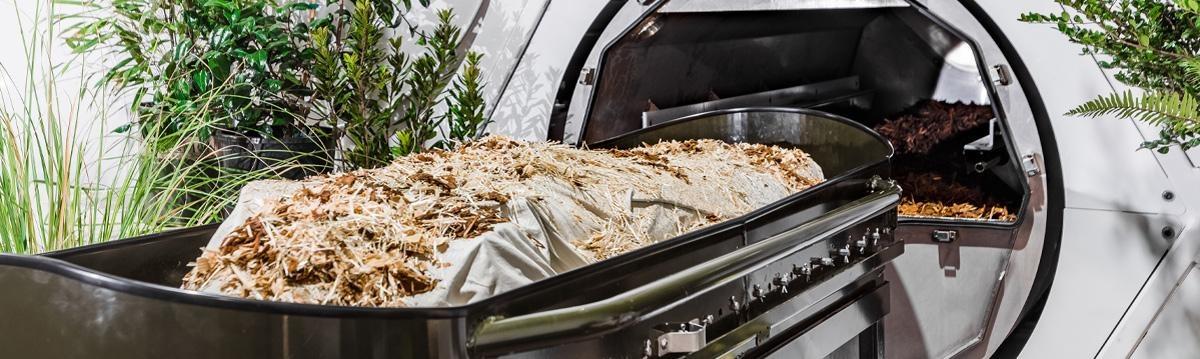
According to Starks and information from Recompose, human composting involves placing a late loved one in a pod-like vessel with organic material like alfalfa and woodchips.
Over the course of a few weeks, the vessel is monitored and rotated as the body breaks down into soil.
Starks described it as a “beautiful, living, rich soil.”
“After 30 days in the vessel, the soil comes out and it's very moist and rich and alive,” she said. “And in some ways, it feels like that person living on.”
After an additional curing period, the soil is ready to use however the family wishes.
But right now, Utah families must fly their loved one’s bodies out-of-state to Recompose.
Starks explained the costs begin stacking up when adding in airfare for family, the crate to house the body, transportation of the crate, and the soil shipment back to Utah—which is about 30 bags equaling a cubic yard.
Right now, Starks Funeral Parlor covers the airfare, but Starks expressed that it’s still difficult on the family and discourages many from going with this option.
“There are some people who haven't chosen it because they don't want to be separated from their person,” Starks said.
She’s hoping Utah lawmakers pass SB 49, pointing out that it creates an opportunity for business and industry growth, and additional jobs.
Human composting’s growing popularity in Utah, she expressed, is in line with Beehive State’s reputation for the outdoors.
“I think it says something about our state, that there's so many people here who are just connected to the Earth,” Starks said. “We're outdoorsy people. It's just, it's a good option for Utah.”
In a hearing on Capitol Hill, a couple of people in the funeral profession expressed concern over how the soil could be used.
“The law does not address the safe placement of the soil or what is to be done with the soil,” said Andrew Anderson, a funeral director and past president of the Utah Funeral Directors Association.
An update to the bill now mandates families document where the soil ends up, and it can’t knowingly be used to grow food for human consumption.
If it passes, Starks envisions building a greenhouse with pods, benches, plants and trees, “where people can just come and visit, read books, have a little cup of coffee or tea while their loved one is naturally transforming.”
“In a way, that feels more like a modernized cemetery,” she said.
Starks has seen families spread the soil at a family cabin, use it to plant trees, keep soil in an urn on display at home, give some to close friends to use meaningfully, or donate the soil to conservation.
She expressed the peace and connection people feel as they truly lay their loved one to rest in nature.
“I feel like in some way, you can feel like that essence is living on,” she said. “And that's a beautiful and healing thing.”
Utah Insight is PBS Utah’s public affairs program, with in-depth, timely explorations of the most pressing issues facing the state. Host Lauren Steinbrecher discusses hot topics with leading experts, local leaders, and everyday Utahns to foster meaningful conversations and diverse perspectives. Whether reporting from the steps of the Capitol, attending rallies, or engaging with citizens on the street, Utah Insight empowers viewers to stay informed and engaged.
You can also find Utah Insight on PBS Utah's YouTube channel, Instagram, and Facebook.