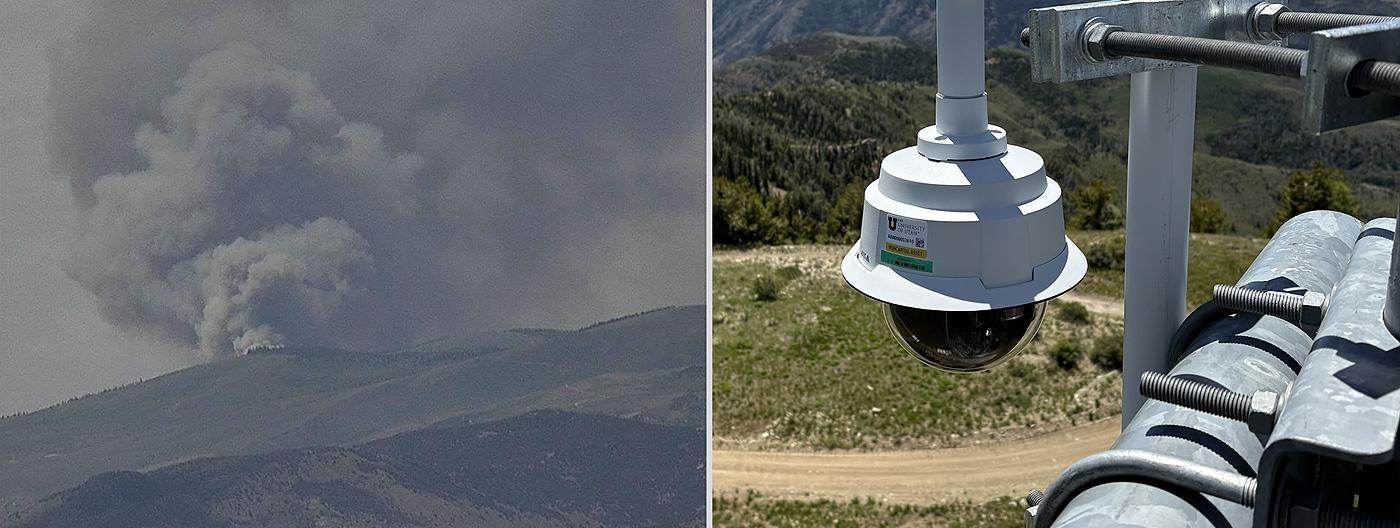
In late May, a camera installed on Lynn Mountain in Box Elder County caught a lightning-sparked wildfire on a mountain in Idaho more than 20 miles away, at lightning speed.
“They were able to respond and quickly get on that fire,” Egly said. “So, we’re already seeing results.”
Being the 'eyes and ears'
Had the Lynn Mountain camera not caught the Summit Creek Fire in Idaho so quickly, it’s hard to tell how long it would have taken a person to notice the smoke and be able to pinpoint where exactly it was coming from.
“It could have been hours before somebody would have seen that fire and known that they had a problem on their hand,” said Chris Delaney, geographic fire chief of the Great Basin at the United States Wildland Fire Service.
When massive blazes like the Cottonwood Fire blow up, every moment matters in saving people and homes, and Delaney said the cameras help them, “anticipate how far out we need to be ahead, warning and evacuating people, or even putting in fire and fuel breaks.”
“It helps us be eyes and ears out there where it’s a little bit more remote,” he said.
Beyond speeding up the initial response, Delaney described how the network is also helping federal, state, and local crews strategize ongoing firefighting efforts to contain fires faster.
“Real-time data is absolutely key… being able to see what the fire is doing, being able to anticipate where the fire’s going, how fast is it spreading,” he said. “And even at night when we can't see with our naked eye, but we can see through the camera, we can see how intense- what the fire activity is doing, and what the rates of spread are.”
Egly said they are installing a new camera every week, with a plan for 21 cameras around the state. Delaney said the goal over the next five years is a network of 60 cameras.
In addition to helping firefighters, Egly explained how University of Utah researchers are using the cameras to collect data.
“On fire mitigation, fire behavior, climate studies,” he said, of the study possibilities. “One thing that we're seeing is that they're measuring the cloud plumes, how these fires explode.”
Through a partnership with ALERTWest, the Utah cameras joined a vast network across the western United States, using AI to keep an eye on our forests and mountain communities.
“Our goal is to try to get on every fire possible as soon as possible,” Delaney expressed. “This camera network is going to definitely help us.”
.jpg)




.jpg)